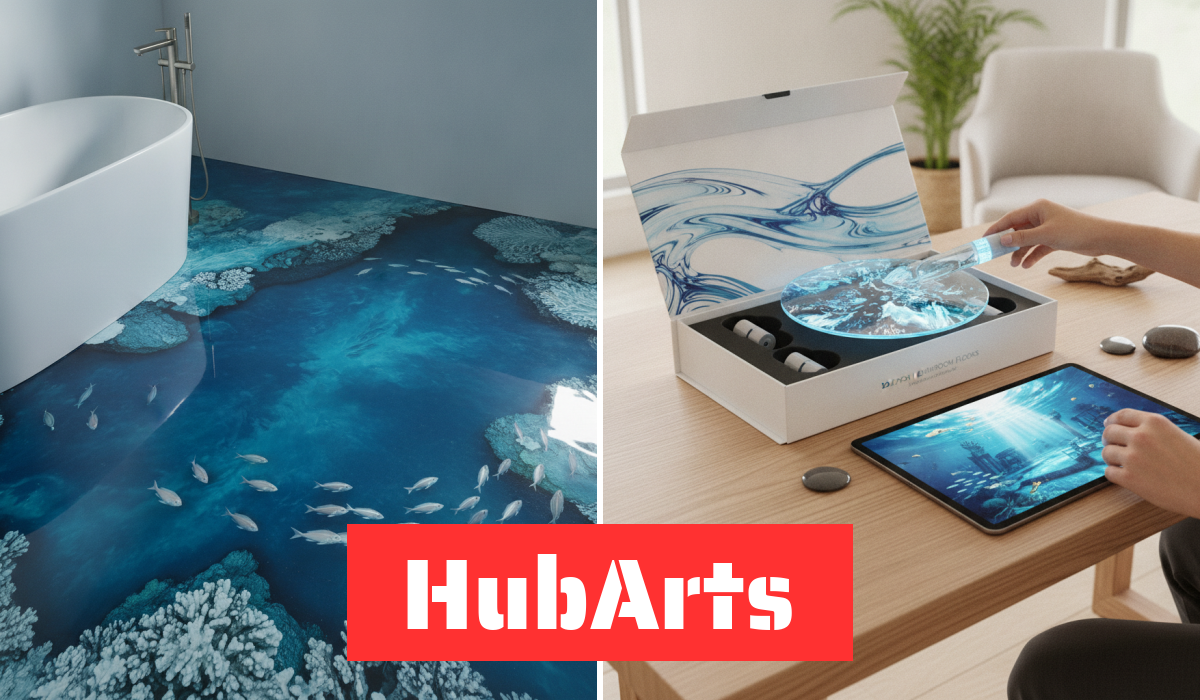
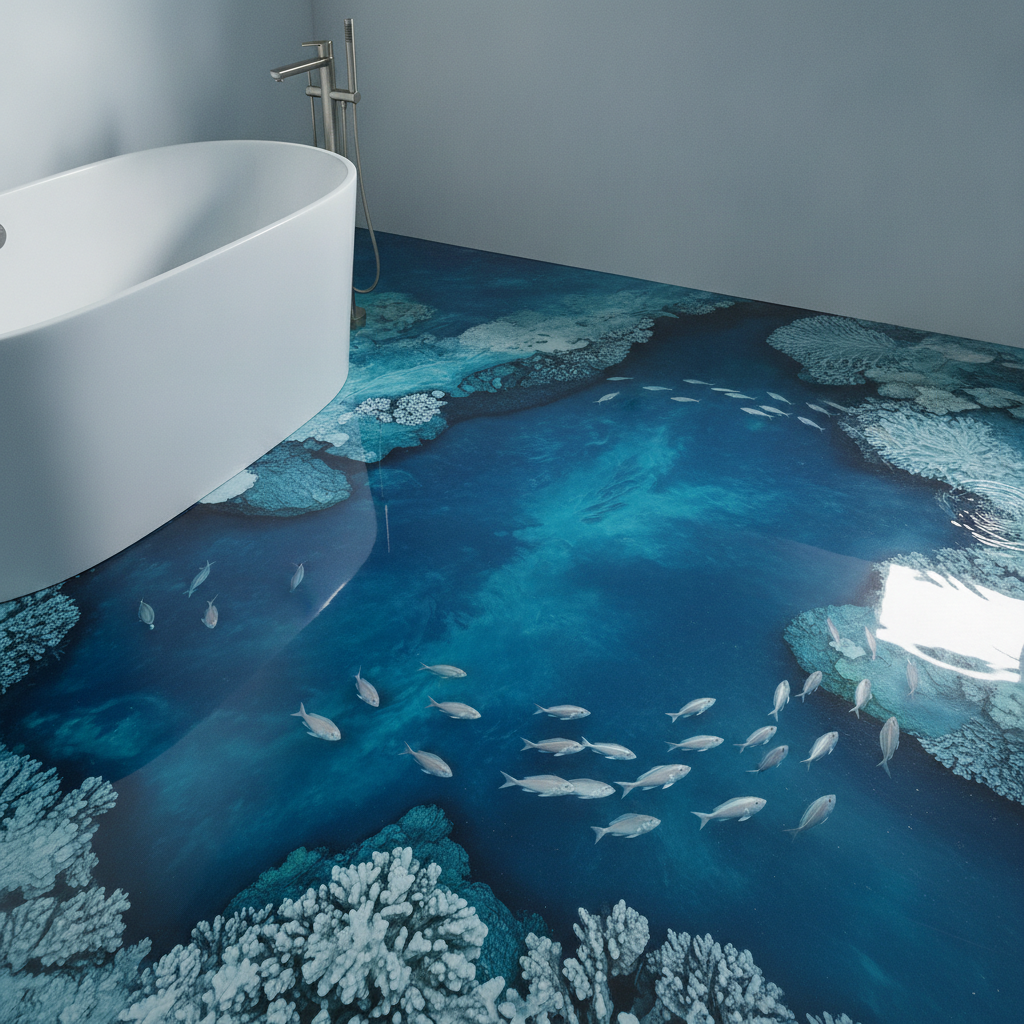
Imagine stumbling into your master bathroom at 3:00 AM, half-asleep, only to feel a flash of primal adrenaline because your feet are about to step onto a hyper-realistic, churning ocean abyss filled with glowing jellyfish. Welcome to the bizarre world of generative AI visualizers pumping out the viral home decor trend of the 3D epoxy bathroom floor. While social media algorithms act like installing a liquid marine sanctuary next to your bidet is as simple as laying down a rug, the reality behind these AI-generated 3D epoxy bathroom floor concepts is a hilarious mix of futuristic prompt engineering, visual trickery, and extreme DIY reality checks.
The Viral Visual Madness: What Is AI-Generated 3D Epoxy Bathroom Floor Design?
The sudden explosion of the 3D epoxy bathroom floor across interior design feeds isn’t an accident; it is the direct result of modern generative AI design tools hitting a sweet spot in texture rendering, lighting calculation, and depth perception. AI image generators like Midjourney, Stable Diffusion, and specialized interior visualization platforms have unlocked the ability to generate seamless resin finishes with mind-bending photorealism. What used to take high-end visual effects artists hours to composite can now be spun up in seconds: a custom 3D epoxy bathroom floor featuring tumbling tropical waterfalls, crystal-clear coral reefs, or geometric infinity mirrors.
However, there is a massive operational gulf between an AI rendering of a 3D epoxy bathroom floor and the chemical reality of pouring toxic multi-part resin inside a windowless suburban powder room. When an AI design tool drafts a 3D epoxy bathroom floor, it conveniently ignores pesky physics like moisture vapor transmission, subfloor leveling, yellowing UV degradation, and the fact that wet resin is slicker than an oil slick on a bowling alley. The AI gives you the fantasy of floating over an island lagoon, but it neglects to mention that the physical build requires industrial respirators, precision self-leveling compounds, and a budget that could fund a small space mission.
How the AI Tool Turns Your Porcelain Dreams into Optical Illusions
1. Prompt-to-Pavement Rendering
Let’s break down how these interior AI platforms actually craft a 3D epoxy bathroom floor layout from scratch. First, you feed the visual generator a base image of your existing lavatory or a generic spatial floor plan. The underlying neural network analyzes spatial geometry, identifying fixture boundaries like the toilet base, vanity kickplates, and shower drain placement. Once the spatial matrix is locked, the AI overlay engine calculates forced perspective. For a 3D epoxy bathroom floor to work visually, the embedded image—whether it’s a swirling cosmic vortex or a koi pond—must be warped based on the primary entry angle of the human eye.
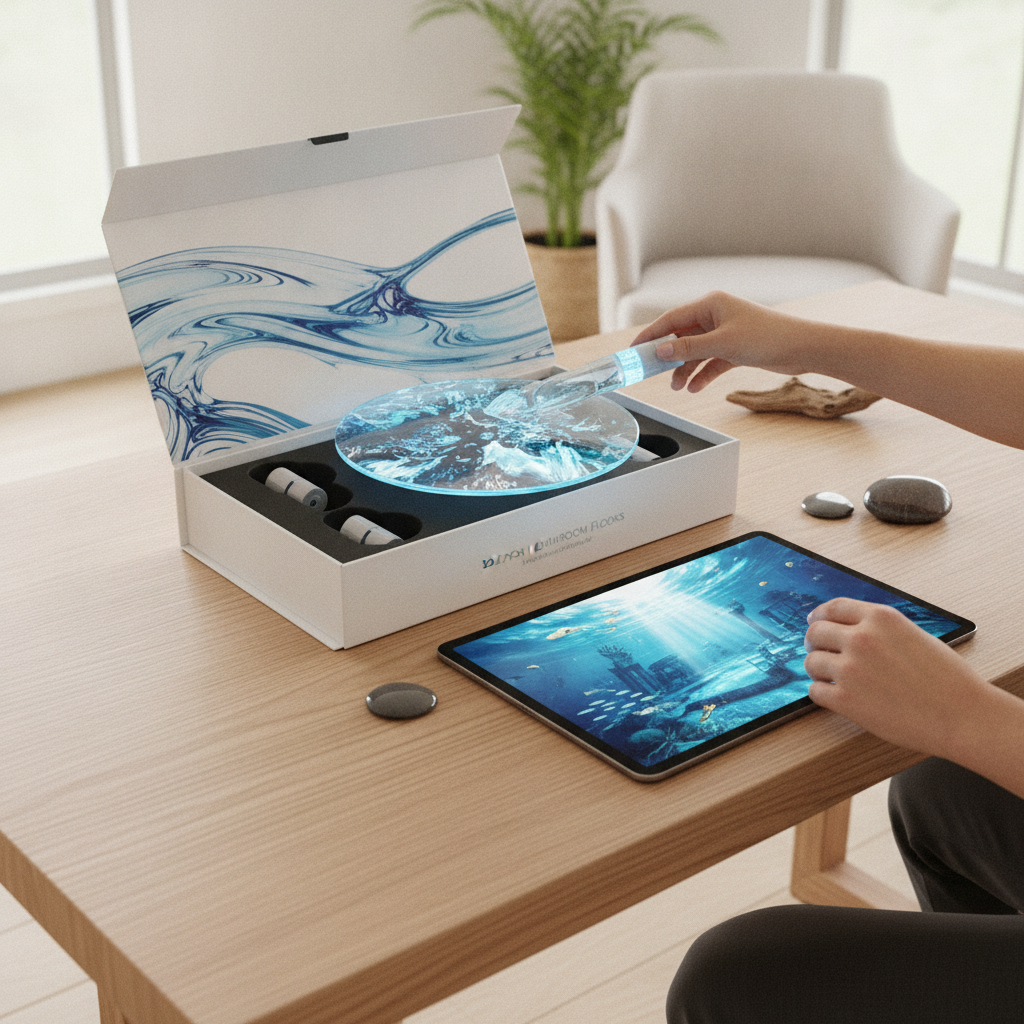
The AI calculates these vanishing points automatically, saving human designers from tedious manual anamorphic stretching. When you generate a 3D epoxy bathroom floor concept, the software aligns the depth vectors so that stepping through the doorway produces a convincing three-dimensional optical illusion. It turns a standard flat surface into a dramatic spatial drop-off without requiring structural alterations.
2. Spatial Awareness and Procedural Depth Shadering
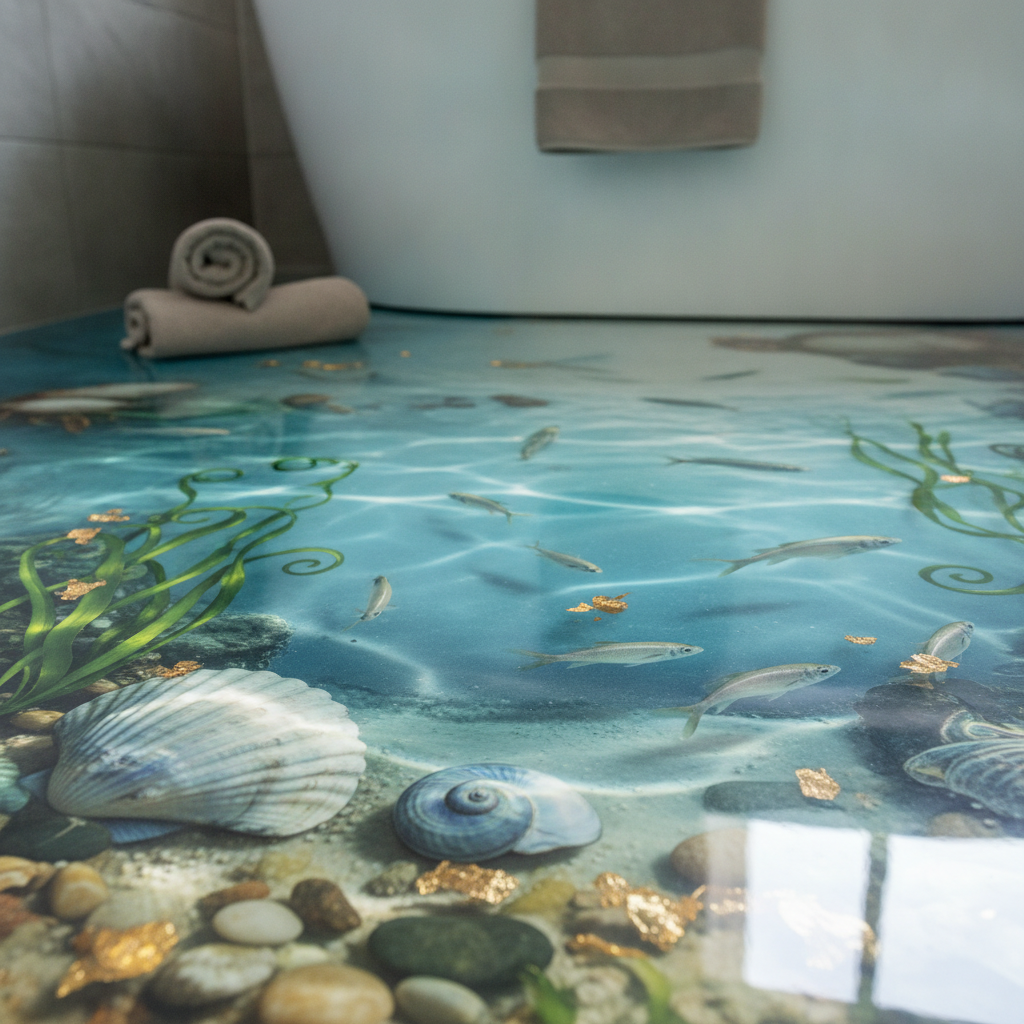
Second, the generative model applies procedural depth mapping across the entire floor plane. In an AI-generated 3D epoxy bathroom floor concept, lighting engine shaders simulate a multi-layered epoxy application: a primer coat, a high-resolution printed vinyl or hand-painted mural layer, and a thick, crystal-clear protective top coat. The AI simulates physical depth by generating synthetic drop shadows beneath rendered objects like pebbles, sea turtles, or floating glass tiles.
This shadow layer tricks your brain into perceiving true volumetric spatial depth on a completely flat plane. When you view the render of a 3D epoxy bathroom floor, the artificial intelligence ensures that ambient room light appears to bounce off the glossy clear coat while refracting naturally through the graphic layer beneath. The result is so convincing that your brain temporarily overrides your sense of touch.
Who Is This For (and Who Should Run Away)?
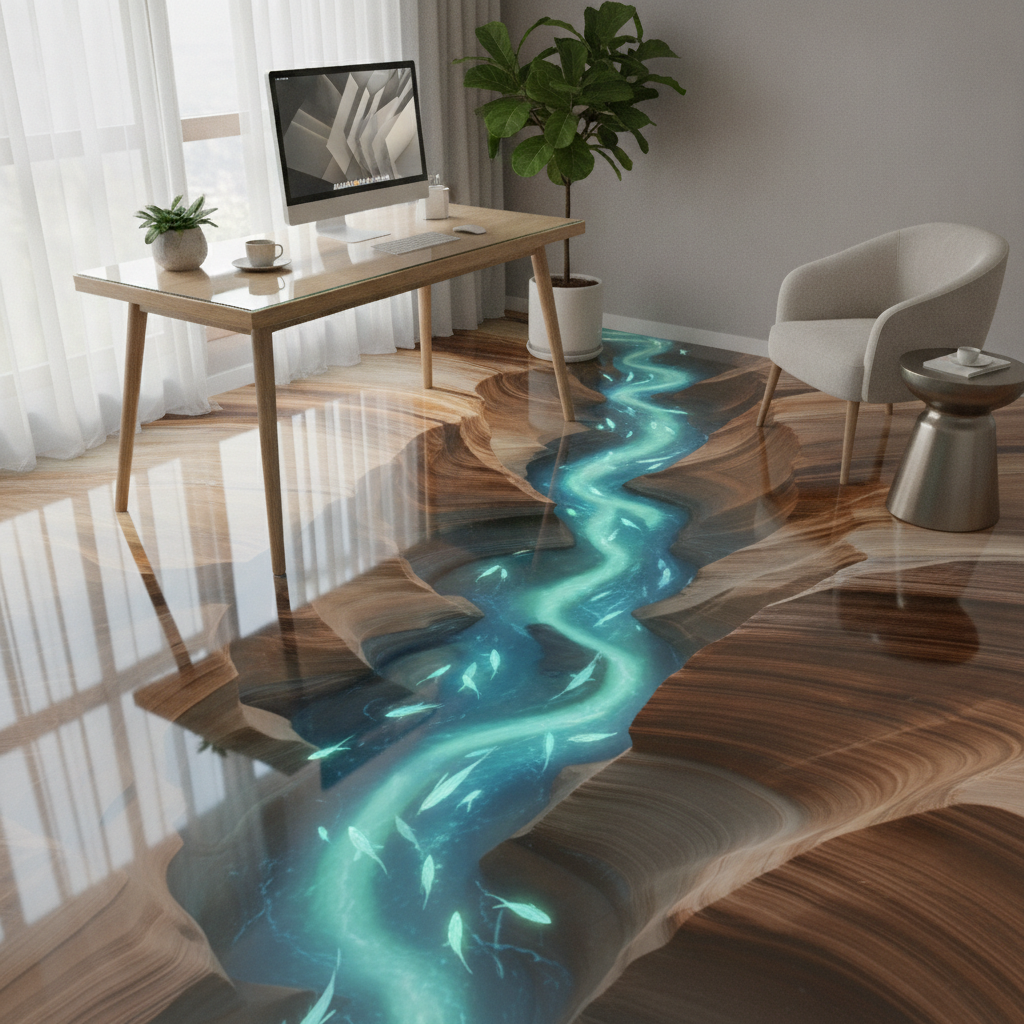
So, who is this AI-driven 3D epoxy bathroom floor tool actually built for? If you are an interior designer looking to push high-concept, audacious client proposals without spending three days in CAD and Blender, this software is an absolute goldmine. You can generate fifty distinct 3D epoxy bathroom floor variations in under twenty minutes, presenting clients with options ranging from subtle metallic slate swirls to full-blown riverbed visual illusions. It allows designers to rapidly test how dramatic flooring textures interact with existing fixtures and lighting setups before anyone pops the cap on a bottle of hazardous chemicals.
It is also a fantastic sandbox for eccentric homeowners and brave DIY enthusiasts who want to visualize extreme home remodeling before making a catastrophic financial mistake. By feeding your actual room dimensions into an AI 3D epoxy bathroom floor generator, you quickly discover whether a hyper-realistic tiger shark staring up from your bath mat brings peace or perpetual stress. It offers a low-risk environment to test bold aesthetics, helping you discover that maybe—just maybe—a subtle pearlescent slate resin fits your morning routine better than a dramatic 3D epoxy bathroom floor featuring a bottomless elevator shaft.
On the flip side, contractor circles and professional installers view these AI-generated 3D epoxy bathroom floor mockups with a mix of awe and mild terror. Clients regularly walk into showrooms holding an AI render of an impossible 3D epoxy bathroom floor with embedded glowing nebulae and seamless glass clarity over an irregular layout, expecting it to cost five hundred dollars and take two hours to complete. The AI tool rarely flags structural constraints, such as the fact that pouring thick resin on a second-story wooden subfloor might cause joist strain or that cleaning an ultra-glossy 3D epoxy bathroom floor without scratching the finish requires the gentleness of an art museum curator.
Furthermore, many AI visualizers struggle with long-term wear simulation. A pristine AI-generated 3D epoxy bathroom floor looks breathtaking on day one in a digital canvas, but AI rarely renders tiny scratches, rubber heel scuffs, or moisture haze underneath the seal. If you plan to use AI visualizers for your home renovation project, treat the output as a conceptual mood board rather than an architectural blueprint. The technology is phenomenal at sparking creative courage and breaking the tyranny of boring beige ceramic tile, but you still need human craftsmanship to bridge the gap between a pixel-perfect AI render and leak-free residential plumbing.
In the end, the AI 3D epoxy bathroom floor trend represents everything we love and fear about modern generative design. It democratizes wildly surreal interior architecture, letting anyone transform a basic washroom into a canvas of spatial art. Whether you choose to execute a real-world 3D epoxy bathroom floor or simply enjoy generating bizarre, hyper-realistic aquatic lavatories on your lunch break, there is no denying that AI has permanently altered how we dream about home decor. Just remember to buy some anti-slip rubber mats if you ever actually decide to turn your prompt creations into physical resin.
Quick specs
| Product Category | AI Interior Design & Floor Rendering Tool |
| Primary Output | Anamorphic 3D Epoxy Floor Concepts |
| Core Tech | Generative Diffusion & Depth Mapping Shaders |
| Generation Speed | 10 – 30 Seconds per Spatial Render |
| Real-World Feasibility | High Visual Impact / High DIY Complexity |
Our rating
- Usefulness: ★★★☆☆ (3/5)
- Ease of use: ★★★★★ (5/5)
- Uniqueness: ★★★★☆ (4/5)
The AI 3D epoxy bathroom floor design trend is a masterclass in visual prompt engineering that will either inspire your next jaw-dropping home renovation or give your local flooring contractor a panic attack. While the AI software delivers breathtaking, photorealistic spatial illusions with astonishing ease, it completely ignores the gritty realities of chemical curing, slip hazards, and installation budgets. Use it liberally for creative inspiration, but keep your feet firmly planted on solid ground before buying barrels of resin.
Discovered via the original link. This article is our own original write-up.